Disneyland Metro Station
Shanghai, China
Project Details
-
Material & Services:
Engineering, fabrication and installation of approximately 3,000 m² of double-layer ETFE air cushions, including the aluminium clamping and eaves system, pneumatic air-supply system, lighting coordination and waterproof drainage details.
-
Construction Period:
2013–2015
-
Owner:
Shanghai Shentong Metro Group Co., Ltd.
-
Client:
Shanghai Rail Transit Shenjia Line Development Co., Ltd.
-
Architect:
East China Architectural Design & Research Institute Co., Ltd. / Shanghai Modern Architectural Decoration & Environment Design Research Institute Co., Ltd.
-
Engineer:
Shanghai Urban Construction Design & Research Institute (Group) Co., Ltd.
Project Description
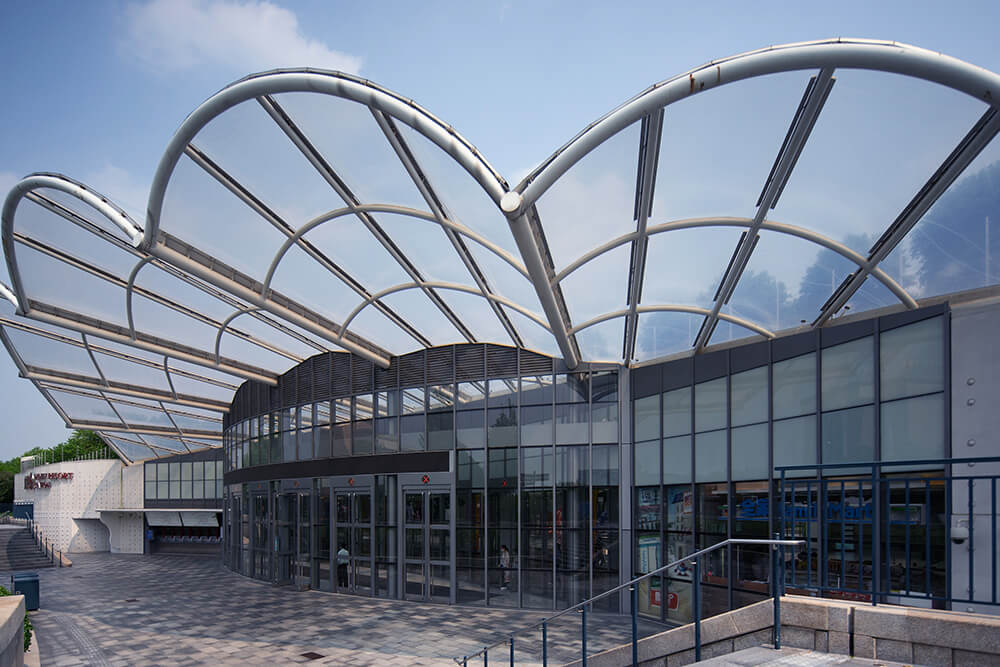
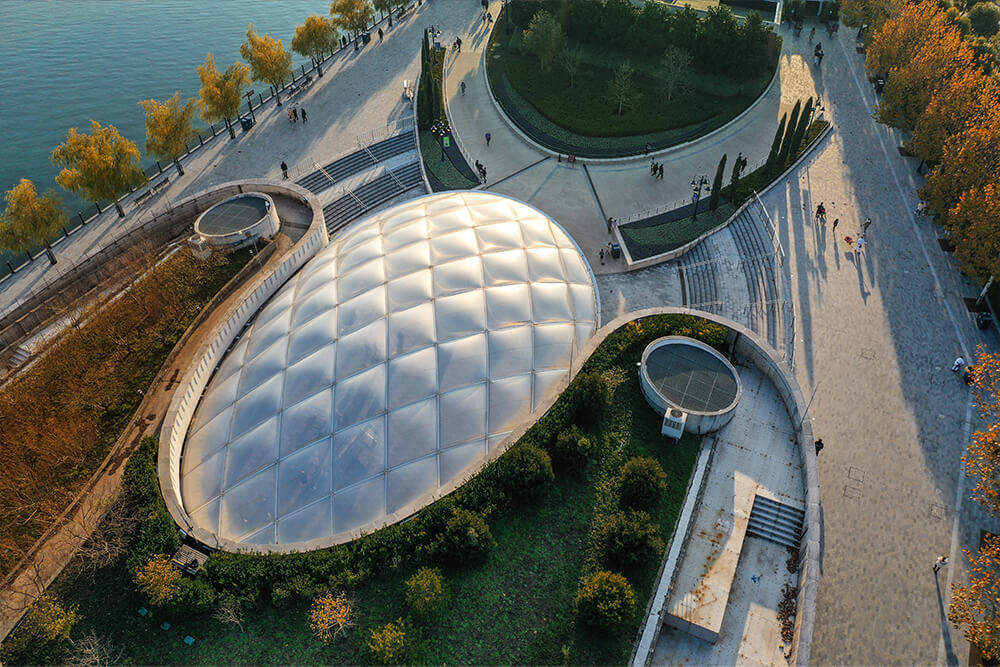
Shanghai Metro Line 11 Disneyland Station forms the public transport gateway to the Shanghai Disney Resort. Completed in 2015 and opened to passengers in 2016, the station combines the functional requirements of a major transport facility with the playful architectural character of its surroundings. The sweeping entrance canopy is shaped by a spatially curved steel gridshell and an approximately 3,000 m² double-layer ETFE air-cushion roof. Viewed from above, its dynamic silhouette resembles a pterosaur spreading its wings.
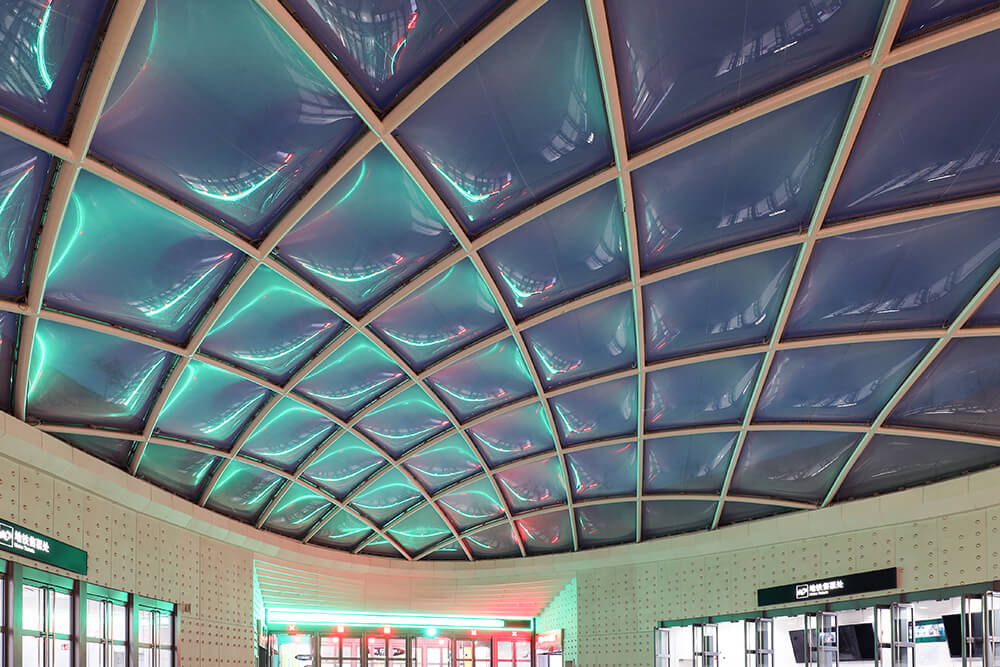
PFEIFER Structures engineered, fabricated and installed the modular diamond-shaped ETFE cushions together with the associated pneumatic system and perimeter details. Maintained at a constant low pressure, the cushions form a lightweight, durable and translucent building envelope. Natural light passes through the membrane to create a soft and welcoming atmosphere, while integrated LED lighting transforms the canopy into a colourful landmark at night.
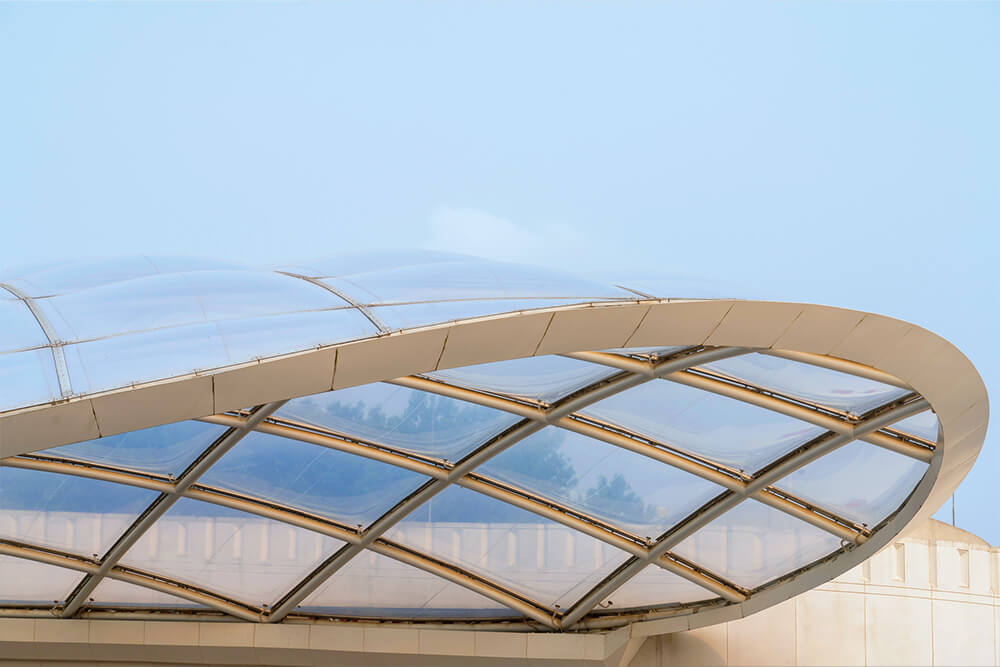
Specially developed aluminium profiles securely connect the ETFE cushions to the supporting structure. The curved eaves incorporate waterproofing and controlled drainage while providing shelter at the heavily frequented station entrances. Nonlinear structural analysis was used to optimise the membrane system and its supporting components for wind suction and deformation, ensuring reliable long-term performance under Shanghai’s typhoon-prone coastal conditions.